PDO Threads
Dissolvable sutures placed under the skin to lift and support tissue that has begun to descend. As they dissolve they also encourage new collagen along their path.
Begin your Journey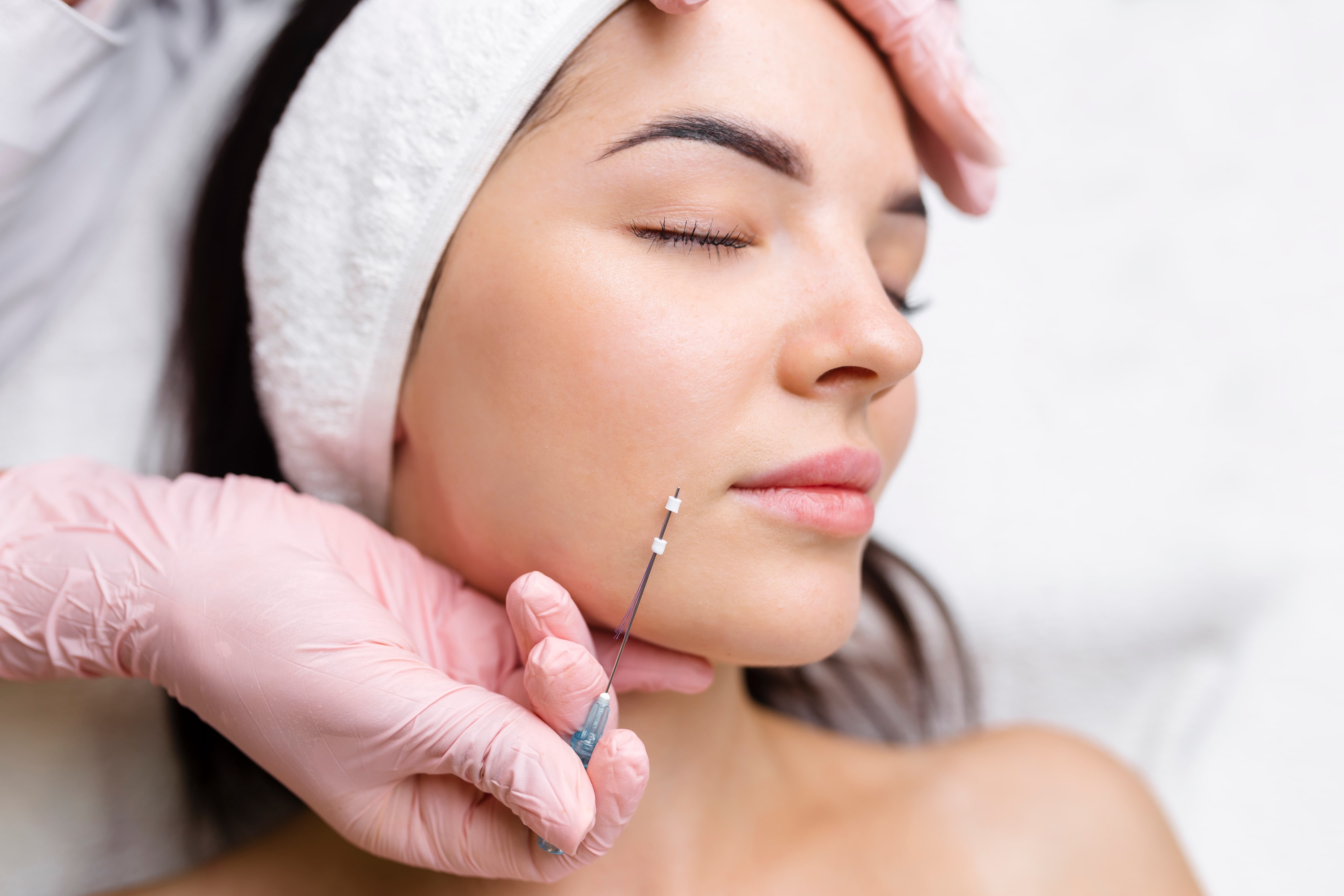
Knowing What Threads Can and Cannot Do
Threads are often marketed as an alternative to a surgical lift, and that comparison sets the wrong expectation. They produce a modest repositioning of tissue, best suited to early laxity along the jawline, the midface, the brow, and the neck. Where laxity is advanced and skin is heavy, threads will disappoint, and Yve will tell you that plainly rather than take the appointment.
Smooth threads work differently again, placed in fields rather than for lift, to improve crepey skin quality on the neck or around the mouth. Many patients combine threads with biostimulators or energy-based treatments, using each for what it does best. That layered approach is usually what produces a result worth the investment.

Lift and Collagen in a Single Treatment
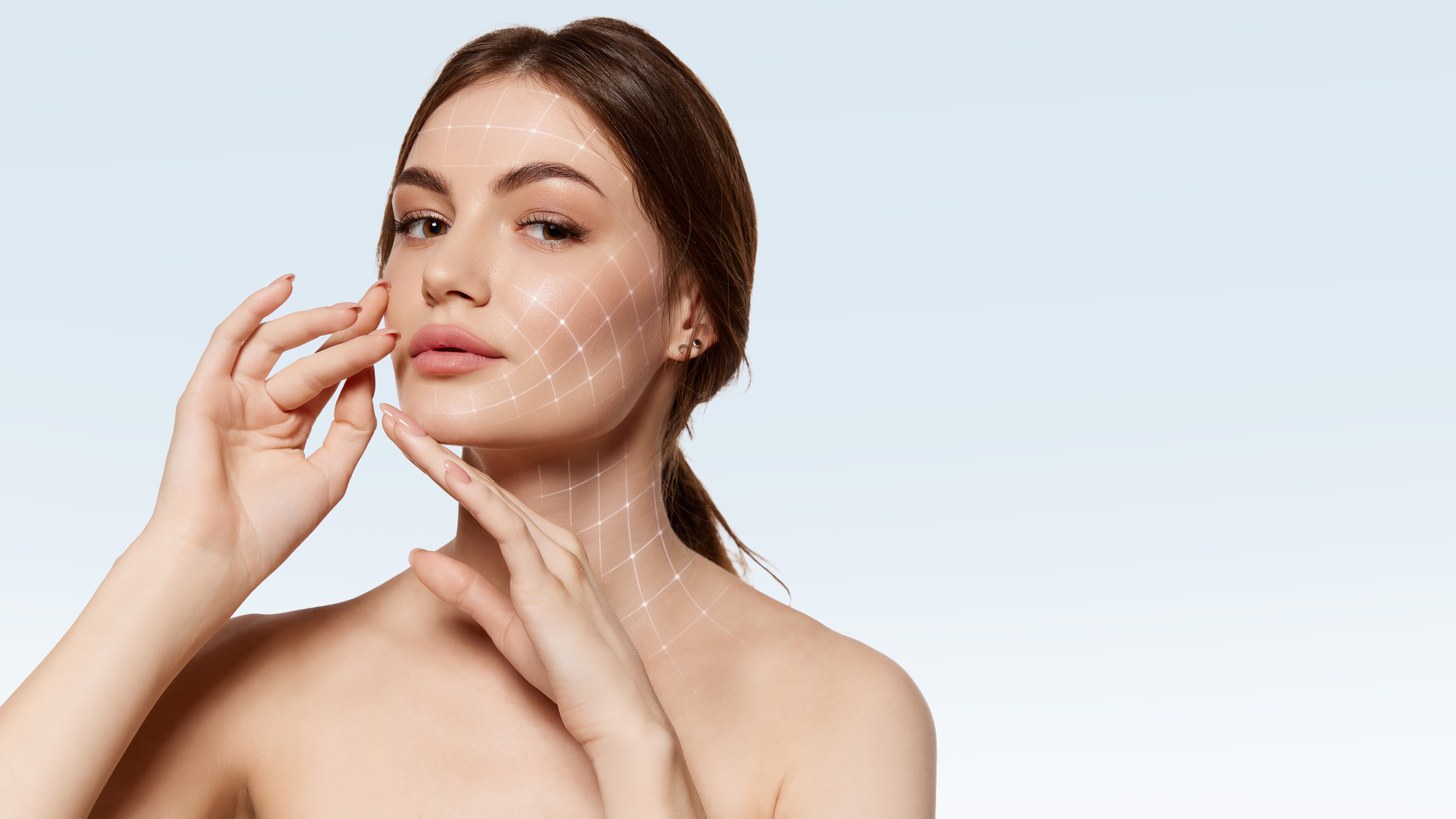
PDO threads are made from polydioxanone, a material used in surgical suture for decades and one the body absorbs completely. Introduced beneath the skin through a fine cannula or needle, they do two things at once. Barbed threads catch the tissue and provide mechanical lift immediately. All threads, barbed or smooth, then trigger a controlled healing response that lays down collagen along their path before the material dissolves.
That second effect is the one patients tend to underestimate. Even after the thread itself is gone, usually within six months or so, the collagen scaffold it left behind continues to support the tissue. The lift fades gradually rather than disappearing when the material does.
What threads offer patients with early laxity who are not ready for surgery.

How long does a thread lift last?
Is this a substitute for a facelift?
What does the procedure feel like?
What is the recovery?
Beauty should never be about changing who you are.
It should be about preserving what makes you uniquely you.

Ready to Begin With Skin Conserv?
Skin Conserv by Yve is located at 3080 Pinebrook Rd. Suite 1200, in Park City, Utah. The practice is appointment only, and we welcome patients from across the Wasatch Back and greater Salt Lake City area as well as those traveling in to see us.